Walk into any modern fitout in Australia right now and you'll see the same shift: clients are tired of flat. Flat panel cladding, flat painted walls, flat MDF feature panels. The brief is changing, and texture is the new colour.
The hard part is picking which texture. Six signature M-Bossed patterns, four substrates, three finishes, almost limitless colour options. The product is flexible by design, but that flexibility puts the decision back on the specifier. This guide makes it easier.
We'll cover what each pattern looks like, the projects it suits, the substrate combinations that work, and the finish recommendations from our workshop. By the end you'll know exactly which patterns to short-list, and which coaster samples to order.
Before you choose a pattern: 3 questions to ask
Every embossed surface decision comes back to the same three questions. Answer these first and the pattern shortlist gets smaller fast.
What's the room doing?
A bar wants drama. A clinic wants calm. A boardroom wants understated authority. The pattern needs to match the emotional brief, not just the moodboard.
What's catching the light?
Embossed panels live or die by their light source. Side-lit panels (wash lighting, raking sunlight) reveal deep shadow and bring the texture to life. Flat-lit panels (overhead downlights only) can mute the effect.
What's the finish?
Raw MDF, pre-primed, painted, stained, or full-bodied colour. Each pattern reads differently depending on the finish. Bold patterns soften under deep stain. Subtle patterns sharpen under matte paint.
With those answers in mind, here are the six patterns and where each one earns its keep.
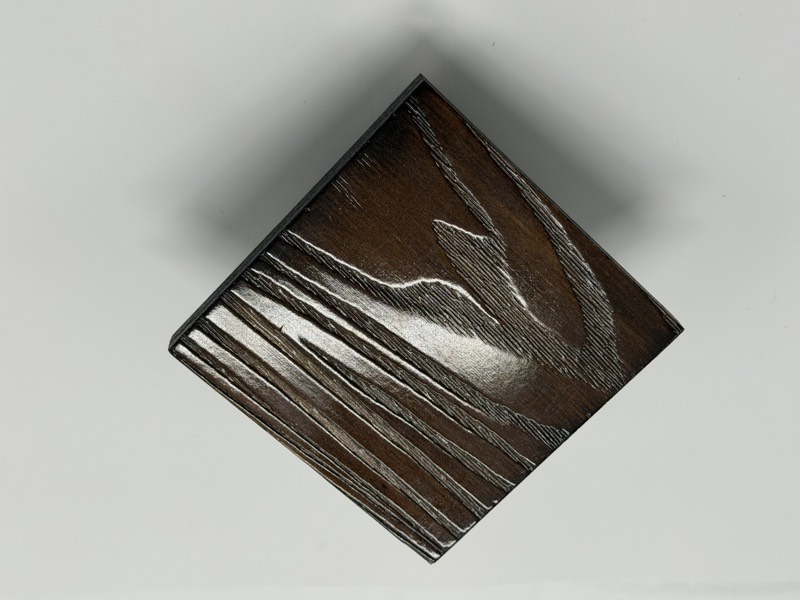
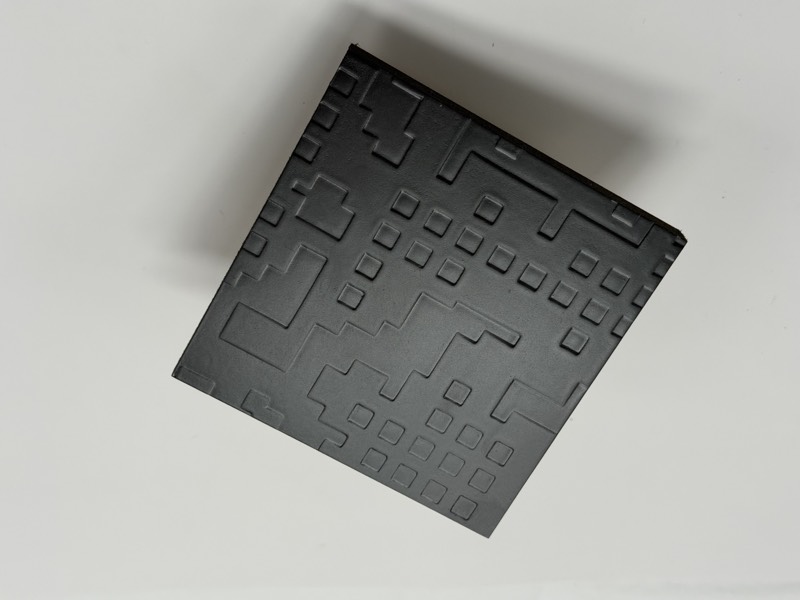
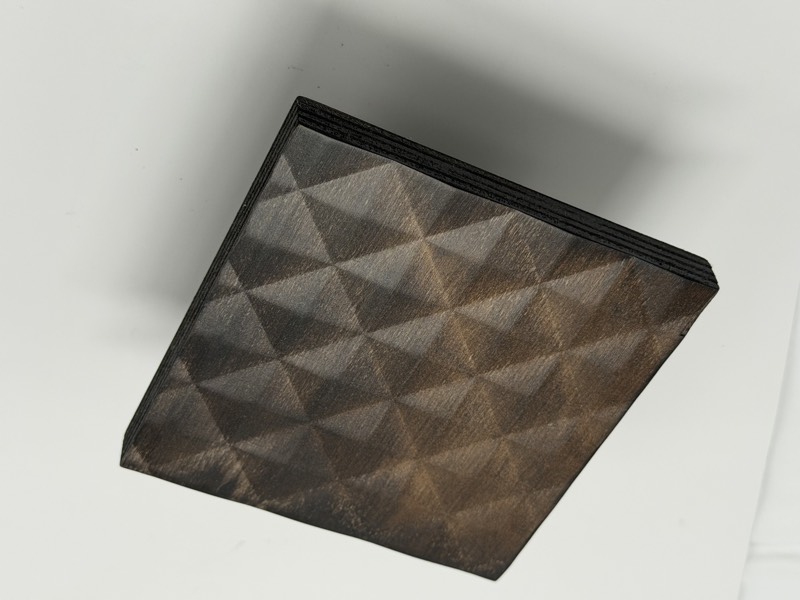
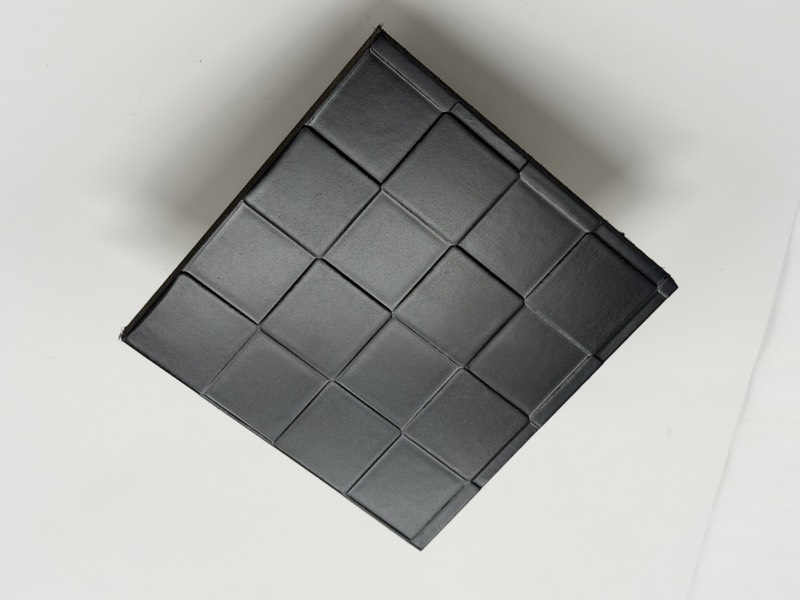
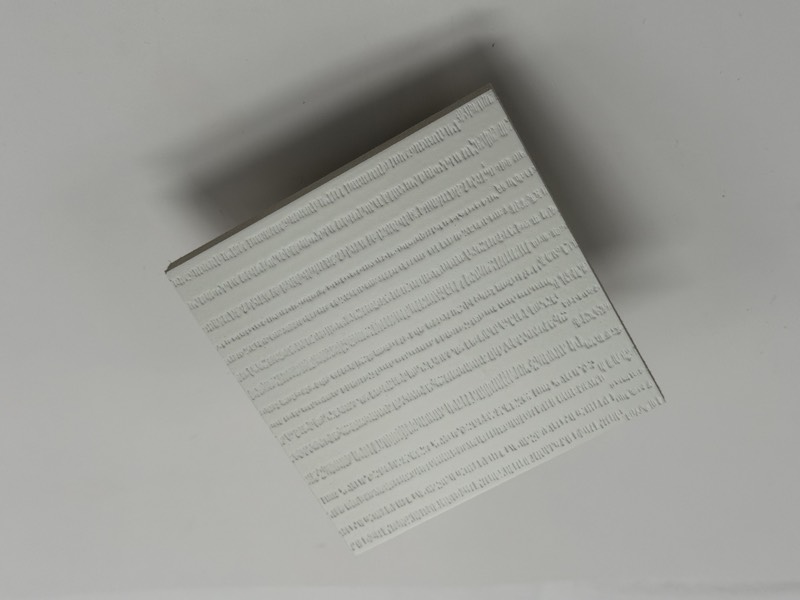
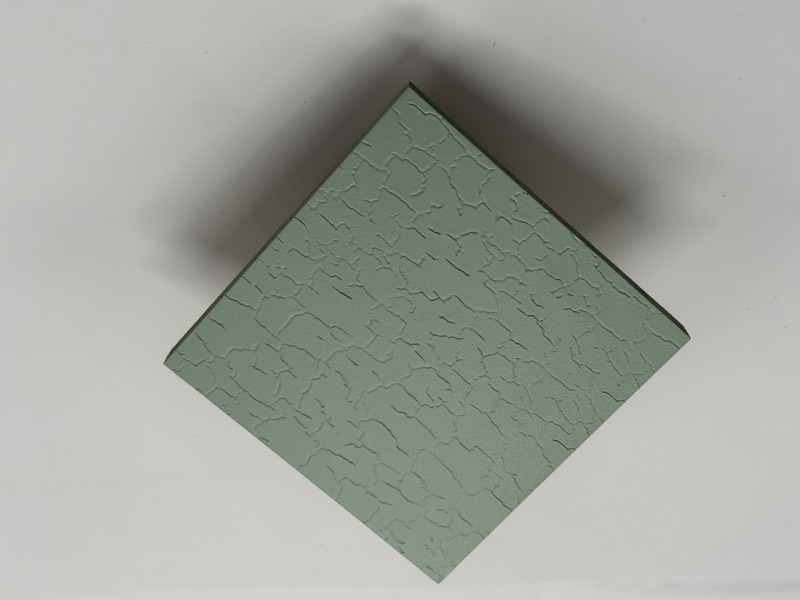
American Oak
Timeless. Inspired by the classic oak grain.
Our most-specified pattern, and the safest first choice for any feature wall brief that asks for "warm" or "natural". American Oak references the long, flowing grain of natural white oak without the cost or lead time of a real timber veneer.
It works because the grain reads at every distance. From across a hospitality fitout it gives the room visual warmth. Up close, the grain has the depth of routed timber. Most importantly, it never feels theatrical. It just feels right.
Best for: Residential feature walls, hospitality dining rooms, joinery cabinetry fronts, retail interiors leaning premium-natural, professional offices that need warmth without being literal about it.
Matrix
Living in the Matrix.
A precise geometric grid that reads modern, technical, and intentional. Matrix is the pattern for projects where the brief says "architectural" or "contemporary" and the designer doesn't want anything that even hints at faux-timber.
It performs spectacularly under wash lighting. The grid creates a repeating shadow rhythm that animates entire walls without any moving parts. Specify it for spaces that need to feel current for the next decade, not last decade.
Best for: Tech office reception, modern apartment lobbies, contemporary restaurant fitouts, retail brand statement walls, residential entries that want architectural impact.
Diamond
Shine bright like a diamond.
The most reflective and light-responsive of the six. Diamond features angular faceted geometry that catches light from multiple directions, creating subtle shimmer through the day as the light source moves.
Pair Diamond with metallic finishes (champagne, brushed bronze, soft gold) for full luxury impact. Or specify it in soft matte tones for a quieter, more sculptural effect. Either way, it's a statement pattern, so use it where the room can carry the drama.
Best for: Hospitality bars, hotel lobbies, premium retail (jewellery, fashion, beauty), residential dressing rooms or powder rooms, any feature wall that's the focal point not the backdrop.
Checkers
Checkmate.
Classic chess-board geometry with a contemporary scale. Checkers brings rhythmic texture without the literalism of a printed graphic, and works equally well as the hero pattern or a transitional element between zones.
It's particularly strong in two-tone applications: alternating squares painted in contrasting colours, or single-colour with the embossing carrying the visual interest. Designers love it for projects where they want pattern recognition but not pattern overload.
Best for: Cafes and casual dining, kids' spaces with grown-up appeal, residential feature walls in living areas, retail wayfinding zones, anywhere a quieter pattern would feel underwhelming.
Rough Cut
The rugged look and feel.
The most tactile of the range. Rough Cut mimics raw, freshly sawn timber with deeper grooves and visible variation across the panel face. It reads as authentic, weathered, and intentionally imperfect.
Specify it where the brief calls for warmth with edge: industrial conversions, brewery fitouts, heritage venues, residential projects with an "honest materials" aesthetic. It pairs beautifully with raw concrete, blackened steel, and natural leather.
Best for: Brewery and bar interiors, industrial-loft residential, heritage hotel renovations, menswear retail, restaurants with rustic-modern positioning, garage and workshop conversions.
Scorched
Ignite your designs.
The boldest pattern in the range. Scorched references the Japanese Shou Sugi Ban tradition of heat-charred timber, with deep textural variation that creates strong shadow and high-contrast surface depth.
Use Scorched when the project needs a single hero moment and nothing else needs to compete. It rewards confident colour choices: deep matte black, charcoal, or surprising soft contrasts (sage, terracotta, plaster pink) that play against the texture.
Best for: Hospitality hero walls, dramatic entry foyers, premium residential fireplace surrounds, designer showrooms, any feature where the wall needs to be the conversation.
Want to see all six in person?
Request free coaster samples of any three patterns. You only pay $25 flat rate postage.
Substrate matters: matching pattern to material
Every M-Bossed pattern is available across four substrates: MDF, plywood, veneer, and solid timber. The substrate decision usually comes down to budget, fixing requirements, and finish preference. Here's how the patterns translate across materials.
MDF (most popular)
The most cost-effective substrate and the one most projects start with. MDF embosses cleanly, takes paint and primer perfectly, and performs well at any panel size. Specify MDF when the panel will be painted or full-coverage finished, and when wall fixing is straightforward.
All six patterns work brilliantly on MDF. American Oak, Matrix, and Checkers are particularly forgiving on MDF and produce repeatable, consistent results across large quantities.
Plywood
The middle option. Plywood gives you a natural timber edge profile and improved dimensional stability over MDF, which matters for larger panels or panels that will sit in environments with humidity variation.
Rough Cut and Scorched look exceptional on plywood, especially when the panel edge is exposed and the natural ply layers contribute to the overall aesthetic.
Veneer
Premium specification. Real timber veneer over an engineered substrate, embossed to add 3D texture on top of natural timber grain. The result is a panel that reads as solid timber at a fraction of the cost.
Talk to M-Bossed at spec stage about veneer species and pattern combinations that suit your project. The right pairing of pattern and species can produce striking results for hospitality and premium residential work.
Solid Timber
The full premium specification. Solid hardwood with embossed pattern, suited to bespoke joinery, hero feature walls, and high-end residential. Lead times and pricing are project-specific. Talk to us before specifying.
Custom sizing: how M-Bossed differs from imports
One of the most common reasons projects choose M-Bossed over imported decorative panels is custom sizing. We cut to your panel dimensions at no extra cutting charge, in increments that suit your fitout. Standard sizes available are 600mm, 900mm, 1200mm, 1800mm, 2400mm, and 3000mm in length, with heights from 300mm to 2400mm.
Custom dimensions outside the standard range are available on request. Because the embossing happens after the substrate is cut, we can match almost any project specification without forcing you to design around fixed panel sizes.
How to shortlist your patterns
If you're specifying for a project right now, here's the workflow we recommend:
Pick three.
Request free coaster samples in three patterns that match your brief direction (you pay $25 flat rate postage). Most designers shortlist American Oak plus two contrast options.
Test in context.
Place the samples on a moodboard with your other materials. The pattern needs to live alongside everything else, not compete with it.
Test under your lighting.
Take the samples to the project site (or an equivalent lighting condition) and look at how shadow plays across the surface. This is the single biggest reveal moment in the selection process.
Order the Sample Box if you're unsure.
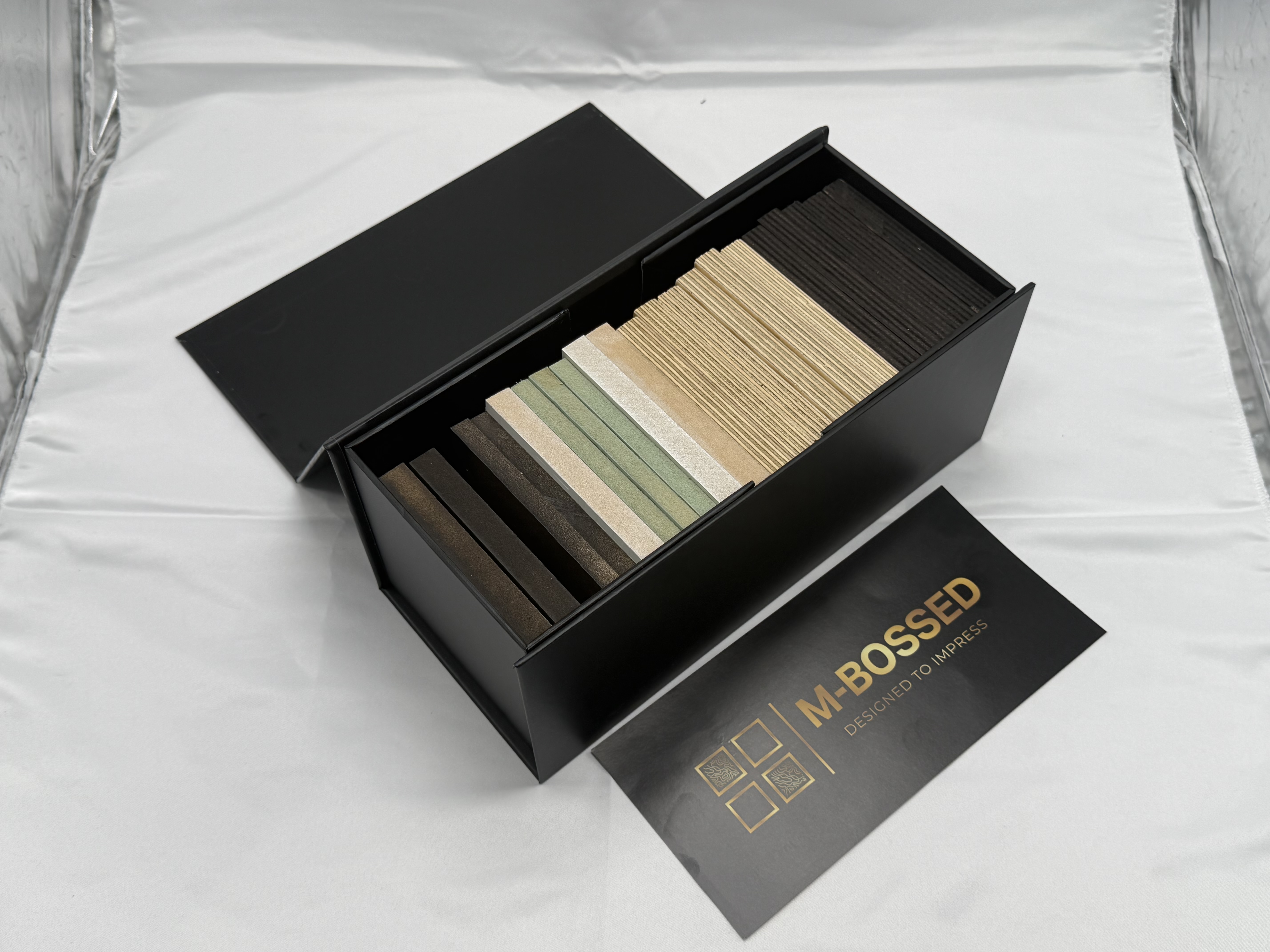
The full Sample Box ($120 AUD, ships free Australia-wide) gives you all six patterns in raw and finished states. It's worth it if you're specifying multiple projects.
Talk to us before final spec.
If the project is large, custom-sized, or commercial-scale, we'll give you exact pricing and lead time before you commit to spec.
Finish: the often-forgotten decision
Pattern is the headline. Finish is the chorus. The same pattern reads completely differently in raw MDF vs full matte paint vs deep stain vs metallic.
For most architectural specifications, we recommend pre-primed panels delivered ready for site finishing. Your painter or finisher controls the final colour to match your scheme exactly. For projects where the colour decision is locked in, we offer painted and stained finishes by request, quoted per project.
Our AI Colour Studio lets you preview any pattern in any colour before you commit. It's a useful tool for client presentations, or for sanity-checking a colour decision before you order.
Final thoughts: the pattern is the start, not the finish
Embossed panels are the most flexible decorative surface specification in Australian commercial and residential design right now. The six M-Bossed signature patterns cover almost every brief direction, and the substrate and finish flexibility means the same pattern can perform in completely different contexts.
The fastest way to get to a confident pattern choice is to hold the textures in your hand. Request free coaster samples (you pay $25 flat rate postage), get them on your moodboard, and let the project tell you which one fits.
See and feel the difference
Request free coaster samples of any three patterns ($25 flat rate postage), or order the full Sample Box with all six textures and finishes ($120 AUD, free shipping Australia-wide).
FREE COASTER SAMPLES